

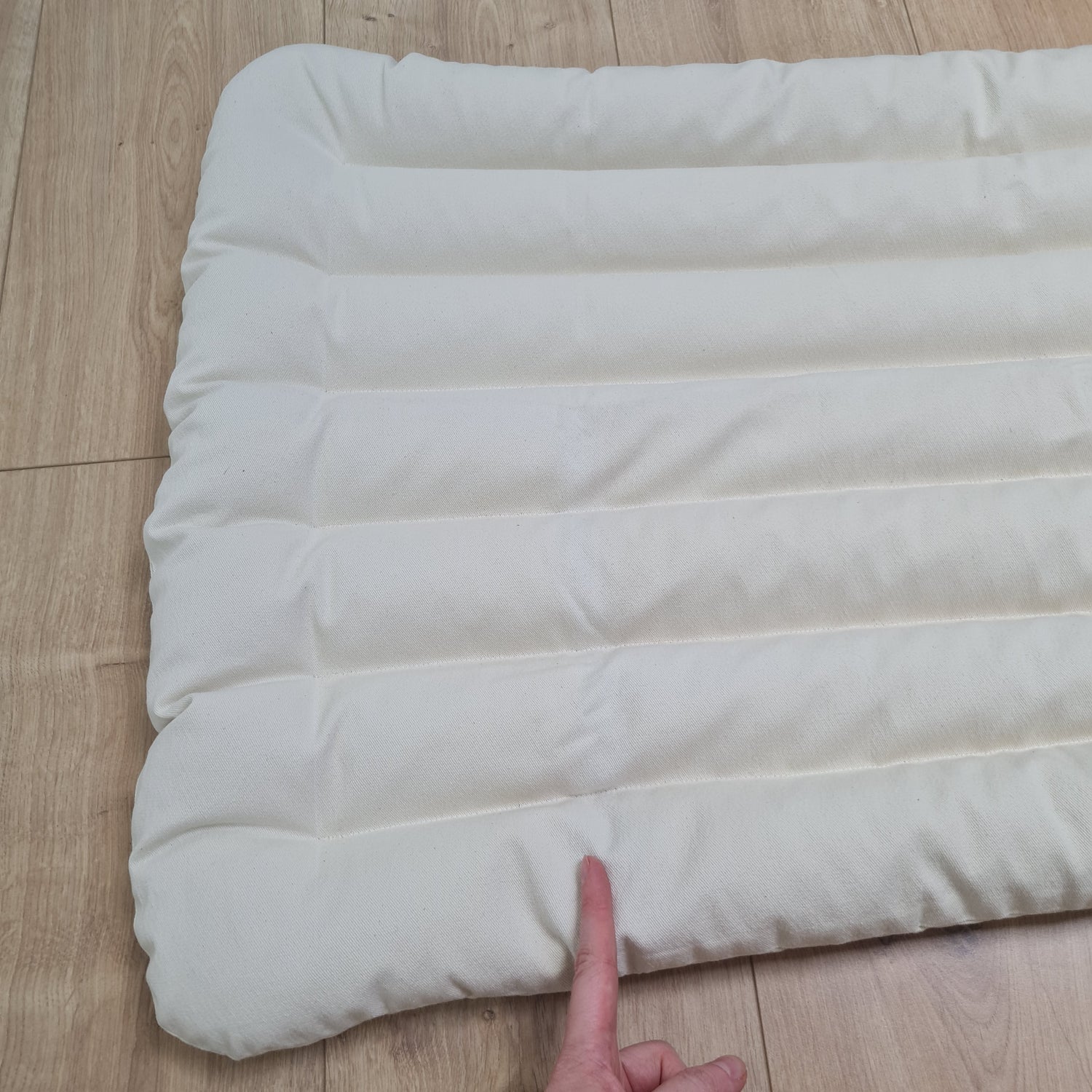
When selecting sleep products for a young child, it's not necessarily about softness or looks. A nap mat comes in contact with a child's skin for hours when used during kindergarten and daycare and can often be folded, moved around, washed, and used over and over again. So parents and educators are now asking how to choose organic nap mats for kindergarten that are safe, sanitary, long-lasting, and convenient.
Why Material Matters for Kindergarten Nap Time
The materials used in producing a nap mat will determine its breathability, its ability to manage moisture, how easy it is to clean, and its ability to endure repeated use.
The synthetic nap mats are usually made with polyester covers or foam and synthetic fiber fillings. Many chemical treatments, dyes, adhesives, and finishes also differ, and there's not enough information for parents to assume a synthetic material will have the same properties as it might in another product. A non-toxic nap mat for kids ought to contain productively disclosed materials, correct structure, and care directions.
When considering a product, check for:
- Visually accessible materials: See the materials used in fabric and stuffing before purchase.
- Minimal unnecessary treatments: Ask if there are unnecessary treatments such as fragrance, finishes, or anything else used.
- Tightly fitted construction: Check for the even distribution of filling and secure seams.
- Practical Care requirements: Ensure it can be cleaned on a regular basis.
- Size: Select a size that is fitting for the child and classroom storage.
Hemp Fiber — an Underused Natural Option for Kids' Bedding
Hemp is a bast fibre obtained from the stalk of the hemp plant. It has naturally strong fibers, making it ideal for hemp textiles that need to be repeatedly folded, washed, and handled daily. When it comes to kids' bedding, the properties of hemp fiber are important, especially for durability and breathability.
Some of the most important properties of hemp fiber for kids are:
- Resistance to repeated handling, abrasion and stretching: Long hemp fibres offer high resistance to repeated handling, abrasion and stretching.
- Breathability: Hemp fabrics allow air to flow, lowering night-time temperature build-up when used to sleep.
- Regulates moisture: Hemp can absorb and release moisture, providing a more comfortable sleep environment.
- Durability: it takes care of and can withstand repeated washing and use when well cared for.
- Dust and bacteria resistant: At the fiber level, hemp is naturally resistant to dust mites and bacteria.
Additionally, hemp is naturally dust mite and bacterium resistant at the fiber level. It's not a claim that hemp bedding is an allergy or asthma cure, but there are attributes to the material which, when managed properly alongside washing and drying, can help to make a sleep environment feel cleaner. As for the filling material, the inside could be made from hemp fibers, and the outside could be made from linen fibers that would cover the surface that comes into contact with the child's skin. Tip for parents seeking natural children's products: when comparing various hemp children's bedding and play products, Hemp Organic can be a solution.
Hypoallergenic Bedding and Sensitive Skin: What Parents Should Know
If the child's skin is sensitive, the parents might want to use bed linen that is made of natural fibres and has limited perfumes, finishes, and unnecessary chemical processes. Breathable textile structures, such as linen and hemp, can be beneficial because they don't need to be made of synthetic fibers.
Before selecting hypoallergenic bedding for kids, be sure to consider these factors:
- Fabric composition: Pay attention to the materials and if there are any concerns, try to avoid any unnecessary blending.
- Filling: See if the material used for filling in the mat includes synthetic fibers, foam, or other treatments applied.
- Finishes and dyes: Think of products that don't have strong fragrances, finishes, or chemical processing.
- Washability: Select washable bedding that can be cleaned on a regular basis as recommended by the manufacturer and follow the instructions.
- Specific sensitivities – When a particular material is known to cause a reaction, consider the individual sensitivities of the child rather than what is simply said to be "hypoallergenic".
Parents of a child who is diagnosed with an allergy, eczema, or asthma should stick to the advice of their child's pediatrician or allergist. Choices of materials should be made in conjunction with, rather than instead of, appropriate medical advice.
How to Choose a Nap Mat for Preschool or Kindergarten
Start with size. The mat needs to be large enough for the child to lie comfortably but fit the storage system or cubby in the classroom. If bedding is oversized, it can be difficult for young children to carry and store. Next, let's think about cleaning and drying. Kindergarten bedding might need to be washed often, so make sure to determine if the whole set can be washed or if there's a removable cover.
Also evaluate:
- Portability: Is it easy to roll, fold, and carry for a child or educator?
- Construction – Does the filling in the seams reinforce the seams, and does it distribute evenly?
- Identification: Will a label or embroidery be attached to the mat?
- Safety information: Is there proper use/care information provided by the manufacturer?
- Storage: Is it possible to keep the mat dry and well-ventilated between use?
There's more to personalisation than looks! If multiple similar sleeping products are stored in a classroom, a child's name embroidered onto a mat will make it easier for a child to identify their product.
Organic Nap Mats vs Conventional Nap Mats: A Practical Comparison
There's no one right or wrong material, simply the right one for the right family or child care centre. It depends on several factors, including budget, washing facilities, durability, and the environment.
- Breathability: Hemp & linen are breathable with good air circulation. Cotton blends tend to breathe more than polyester and synthetic fabrics, depending on the way that they are made.
- Durability: Hemp and linen can be highly durable and are resistant to regular washing. Cotton blends offer moderate durability, and synthetic fabrics can be moderately durable to very durable, depending on the product.
- Moisture-resistance: Hemp and linen are moisture-friendly, with moisture able to evaporate more quickly from these fabrics. Furthermore, cotton is a good absorbent material, and the absorbency of synthetic materials ranges significantly.
- Softness: Hemp will get softer, but not lose its shape, with repeated use and washing. Cotton fabric is typically soft from the ground up, with synthetics being soft but with a different "feel".
- Maintenance: Natural-fiber mats may need to be washed and dried periodically to maintain the integrity of the material. Cotton and synthetic fabrics can be generally fairly easy to care for, but it's also important to follow the instructions from the manufacturer.
- Environmental friendliness: A plant-manufactured fiber, hemp and linen can be biodegradable when they do not contain synthetic materials to a large percentage. The fibre of cotton is also plant-based, whereas polyester and most other synthetic fibre is petroleum based.
- Price: Hemp and linen products may be more expensive in the beginning, due to materials and construction techniques. The price of cotton materials is typically in the moderate category, and synthetic nap mats may be less expensive.
Hemp and linen can offer good durability and a natural feel, but come at a higher up-front cost. They can be made from cotton that is very comfortable and easy to access, or from synthetic materials that are cheap and quickly dry. If a hemp sleeping bag for kids is a priority for your family, a product like a kid hemp sleeping bag is a kindergarten sleeping product that has been made from natural fibers.
Finding the Best Nap Mat for Daycare: What Actually Matters
While considering the best mat for daily use, it is better to take into account the entire lifespan of the product rather than the decorations it has. The ideal daycare mat is comfortable to lie on for extended periods, able to withstand durability challenges, and easy to clean. The dimensions and materials should be clearly outlined, as well.
In group settings, think about these five criteria:
- Hygiene: Is the product easy to clean, dry, and disinfect, as needed?
- Resistance: Do the fabric and seams resist repeated folding and washing?
- Cushion Effect: Does the filling offer proper support or cushion without being overly soft?
- Storage: Will educators be able to store it safely, without creating damp conditions?
- Mat Identification: Can identify each child's mat?
A natural fibre product can additionally suit a more eco-friendly approach with regard to children's possessions. If the idea of using bedding is too much, there are other products, like hemp accessories, using similar plant-based textiles that families can delve into.
Conclusion
So, how to choose organic nap mats for kindergarten? It's best to take the time to examine the label. The parent or guardian should take into account overall fabric, fill, seams, cleaning, size, and safety. Hemp and linen are examples of naturally grown material options to many conventional materials produced for nap mats that are durable and breathable. The simple answer: select natural materials carefully, then read and follow the instructions on how to care for them, and look beyond marketing hype and instead for the child's comfort and hygiene in everyday use.


Leave a comment
This site is protected by hCaptcha and the hCaptcha Privacy Policy and Terms of Service apply.